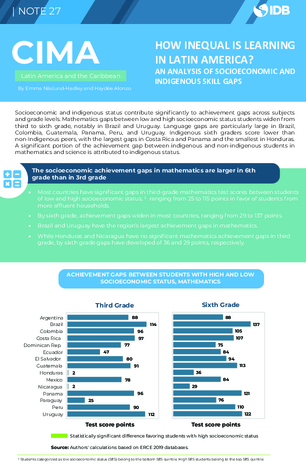
Socioeconomic and indigenous status contribute significantly to achievement gaps across subjects and grade levels. Mathematics gaps between low and high socioeconomic status students widen from third to sixth grade, notably in Brazil and Uruguay. Language gaps are particularly large in Brazil, Colombia, Guatemala, Panama, Peru, and Uruguay. Indigenous sixth graders score lower than non-Indigenous peers, with the largest gaps in Costa Rica and Panama and the smallest in Honduras. A significant portion of the achievement gap between indigenous and non-indigenous students in mathematics and science is attributed to indigenous status.
Imagen
Language content
English
Division